Menu

Explore Products

All productsCompare material families and gradesAerogel Powders & GranulesFor coatings, composites and formulation developmentAerogel Blankets, Felts & MatsFor constrained space, hot/cold service and battery thermal controlAerogel Slurries, Coatings & PasteFor walls, roofs, pipes, valves and formulation workFireproof & Waterproof SolutionsFor steel fire-protection evaluation and porous mineral substrates

Explore Applications

All applicationsExplore projects by use caseBuilding Energy RetrofitLimited available thickness · Thermal bridgesIndustrial Pipe & Equipment InsulationComplex geometry · Inspection accessEV & ESS Thermal BarriersLimited pack space · Heat propagation controlLNG & Cryogenic InsulationLow-temperature service · Condensation controlSteel Fire ProtectionTarget fire resistance period · Steel section factorConcrete & Masonry WaterproofingSubstrate porosity · Water absorption

Resources

Technical Data SheetsRequest product-specific TDSSafety Data SheetsRequest applicable SDSTest DataReview data in contextInstallation GuidesCoating system guidanceProduct Selection GuideChoose by conditionsFAQCommon buyer questionsTechnical resourcesReviewed documentation and application guidance

Company

About Cowin MaterialsOur material focus and technical support approachContactDiscuss product selection or project conditionsNewsSource-linked industry briefs for technical buyersBlogTechnical articles and material-selection guidanceLocationsOffice location and contact detailsQualityProduct documentation and evaluation support Search the site

Penetrating Water-Repellent Solutions for Concrete and Masonry

Penetrating water-repellent materials can be evaluated for concrete, masonry and mineral substrates where reduced water absorption is required without forming a heavy surface film.
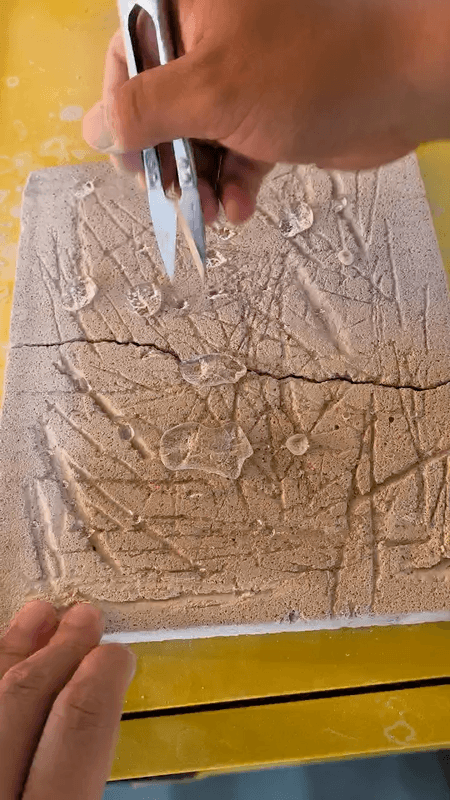
Water droplets beading on a treated mineral sample
Water-beading demonstration on a treated mineral sample. Not a waterproofing system test.

Project challenge

Porous mineral substrates vary in porosity, moisture and contamination, so a penetrating treatment needs trial-area validation rather than a presumed universal dosage.

Information to collect

  • Substrate type
  • Surface condition
  • Project area
  • Water exposure
  • Appearance requirement

Applicable technical data

Concrete & Masonry Waterproofing data and scope
PropertyReported valueBasis
Water absorption ratio19%2024 supplied test-report summary; submitted sample only.
Penetration observation0 mm; no water trace / discoloration2024 supplied report summary; submitted sample and conditions only.
Indicative application rate250 ml/m²Supplied product summary; actual uptake depends on substrate.

Verification steps

  1. Identify substrate porosity, contamination, moisture and water-exposure mechanism.
  2. Prepare a representative patch and document uptake, drying, appearance and water response.
  3. Confirm repair or drainage measures required outside the treatment.

System limits

  • Not a crack-bridging membrane, structural repair material or substitute for drainage design.
  • Do not apply test-substrate values to different concrete, stone or masonry without a test patch.

Documentation and project review

Match the document set to the selected grade, substrate, test method and complete system build.

Request applicable documentation

Last reviewed: 09 August 2026.

Application FAQ

Can a penetrating treatment bridge moving cracks?

No. Crack repair and hydrostatic-pressure control require a suitable separate system.

Review your operating conditions

Send project details
WhatsApp